
Ethics as the Ground of the Path
In the Buddha’s teaching, sīla — ethical conduct — is not an add-on to the spiritual path. It is its very foundation. The traditional image is of a house: without a sound floor, no matter how beautiful the walls and roof, the structure cannot stand. Meditation without ethics is like trying to build on sand. When we harm others through speech or action, we carry remorse and restlessness into the meditation cushion. When our conduct is clean, the mind arrives at practice already lighter.
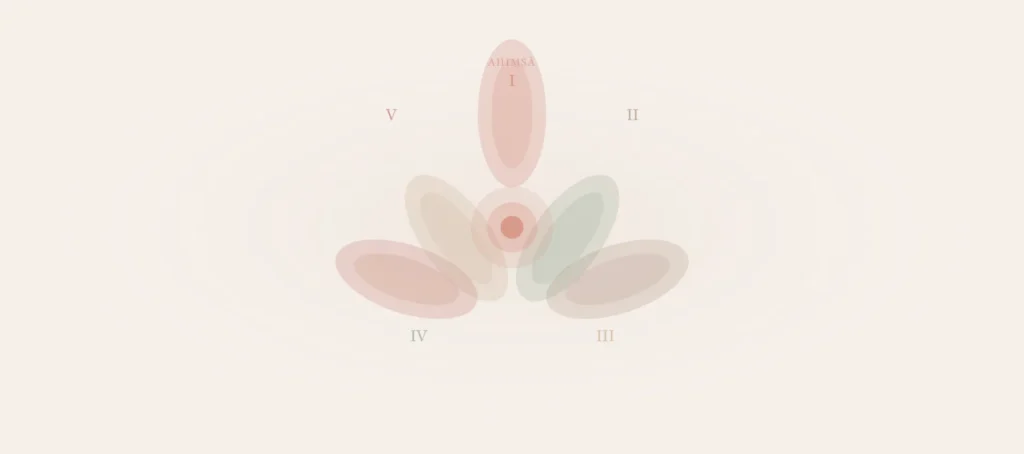
The Five Precepts are the ethical guidelines that lay practitioners undertake. They are not commandments handed down from a divine authority — they are training rules (sikkhāpadā) that practitioners take upon themselves out of understanding and compassion. Each precept has a negative form (what to refrain from) and a positive quality (what it actively cultivates).
The Five Precepts in Detail
1. Refraining from Taking Life
Pāṇātipātā veramaṇī sikkhāpadaṃ samādiyāmi — I undertake the training rule of refraining from taking life. This precept extends compassion to all living beings, recognizing that every creature values its own life as we value ours. In practice, it means intentionally refraining from killing — not as a rigid absolute, but as a genuine orientation of care. The positive virtue cultivated is mettā: loving-kindness and goodwill toward all beings.
2. Refraining from Taking What Is Not Given
Adinnādānā veramaṇī — refraining from theft and dishonesty in acquiring goods or resources. The positive virtue is dāna: generosity. This precept trains the mind away from the grasping quality that underlies so much of our suffering. When we practice generosity — giving without expectation — we begin to loosen the grip of possessiveness that makes the mind tight and fearful.
3. Refraining from Sexual Misconduct
Kāmesumicchācārā veramaṇī — refraining from sexual conduct that causes harm: adultery, exploitation, coercion, or breaking commitments of faithfulness. The positive virtue cultivated is santuṭṭhi: contentment and respect in relationships. This precept protects the web of trust that holds communities together and creates conditions of safety for all.
4. Refraining from False Speech
Musāvādā veramaṇī — refraining from lying, deception, and harmful speech. The scope of this precept extends to the whole of Right Speech in the Noble Eightfold Path: avoiding false speech, divisive speech, harsh speech, and idle chatter. The positive virtue is sacca: truthfulness, which the Buddha called the highest personal quality. A person who reliably speaks the truth becomes trustworthy — both to others and to themselves.
5. Refraining from Intoxicants
Surāmerayamajjapamādaṭṭhānā veramaṇī — refraining from alcohol and other intoxicants that cloud the mind and lead to heedlessness. The positive virtue cultivated is appamāda: mindfulness and heedfulness. The Buddha called heedfulness the path to the deathless, and heedlessness the path to death. This precept protects the clarity of mind on which all practice depends.
Living the Precepts in Modern Life
The precepts are not a checklist to be ticked off. They are a living orientation. In modern urban life, this might look like: choosing words carefully before speaking in difficult conversations; pausing before purchasing something to ask whether you truly need it; being faithful in your commitments; choosing clarity of mind as a daily preference rather than numbing out. The precepts, lived this way, become a continuous meditation practice that doesn’t require a cushion.
Why Ethics Is Not Just Prohibition
A common misunderstanding is that the precepts are primarily prohibitive — a list of things you are not allowed to do. The Theravāda understanding goes much deeper. Each precept is a declaration of what you are actively becoming. Refraining from harm, you become a being of harmlessness. Refraining from theft, you cultivate generosity. Refraining from deception, you become truthful. Refraining from intoxicants, you become clear-minded.
The Buddha taught that one who lives by the Five Precepts becomes a gift to the world — bringing safety, trust, and non-threat wherever they go. This is the social dimension of ethics: the person of good conduct creates the conditions for peace in their family, their community, and their society. The path to liberation is walked in the world, not apart from it.